Tamagoyaki (Japanese Egg Roll)
Layered pan roll
- Time
- 15 min
- Serves
- 2
- Calories
- 260 kcal
- Protein
- 22 g
About this recipe
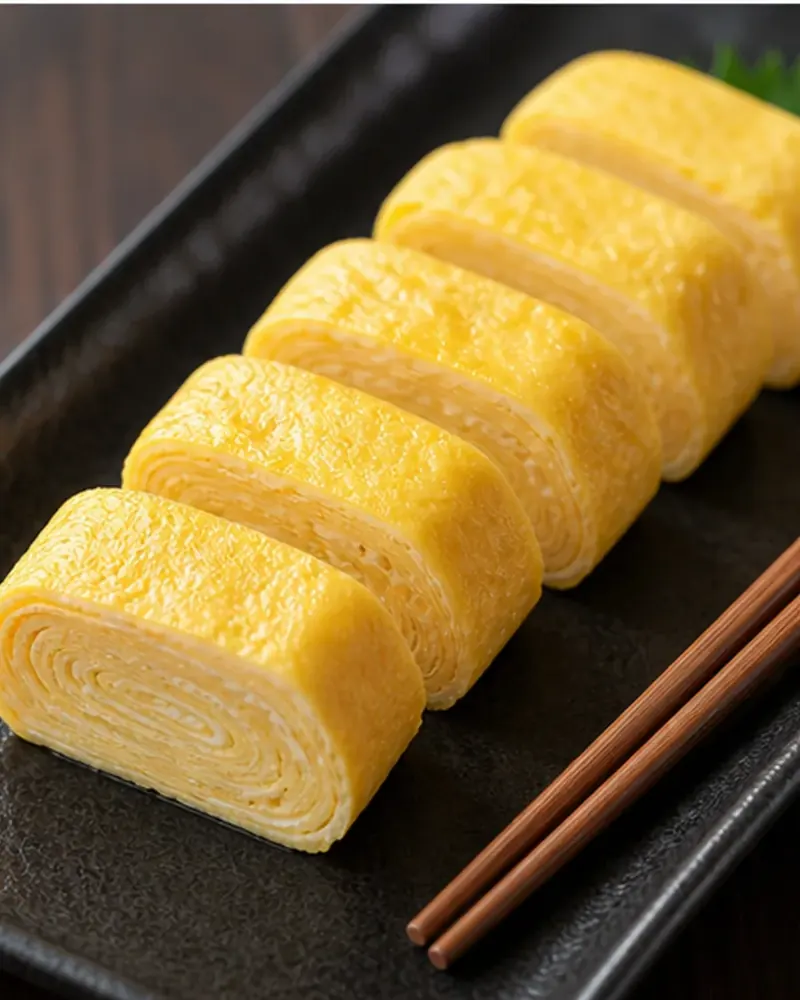
Tamagoyaki is a quiet test of skill—a sweet-savoury omelette built one thin layer at a time, each one half-set and then rolled onto the last until you have a neat log striped with layers visible when you slice it clean. The dashi and mirin give it that custardy, faintly sweet character that sets a Japanese breakfast apart from the savoury egg dishes of other traditions, and when you eat it, the texture is almost silken, more like a custard than scrambled egg. Strain the beaten egg for a satin texture, keep the pan on gentle heat without rushing, and don't chase perfection on your first roll; even a slightly rustic tamagoyaki tastes wonderful and teaches you what to do next time. Dashi provides the savoury base, mirin adds delicate sweetness without cloying, and soy sauce ties everything together with umami. The sugar is barely detectable but essential—it rounds the edges and makes the whole thing taste balanced and complete. Good ingredients matter here because each component is so simple; any off-note becomes obvious. The sieve for straining the beaten eggs is essential—it removes any stringy bits and creates a batter so smooth it produces satin when cooked. This is where many home cooks skip a step and regret it when they see the finished roll. The technique is patience and gentle heat. After straining, pour a thin layer of egg into a hot (not screaming hot) pan, tilting to coat evenly. Cook until the surface just sets but the bottom hasn't browned, then begin rolling toward yourself. Brush more oil into the empty pan space, pour another thin layer and let it flow under the roll, then roll again. This layering builds complexity and visual interest—each slice shows four or five distinct layers. The whole process feels slow, but that slowness is exactly what creates the custard-like texture. Don't rush or increase heat or the eggs will turn rubbery and brown. Serve warm or at room temperature with rice and miso soup, or simply with a small dish of soy sauce for dipping. Store in the fridge for two days; it tastes better on day two. Freezes well for up to one month.
Ingredients
Method
- 1 Beat eggs with soy, mirin, sugar, dashi and salt — pour through a sieve if you want satin-smooth.
- 2 Heat a small rectangular pan (or non-stick) on medium-low, brush with oil.
- 3 Pour a thin layer of egg, cook till the surface just sets, then roll to one side.
- 4 Brush more oil into the empty pan, pour another thin layer; lift the roll so the new layer flows under, then roll again.
- 5 Repeat till all egg is used — you should build 4-5 thin layers into one log.
- 6 Rest 2 minutes, slice into thick rounds; the centre should be tender, not dry.
Nutrition
⚠️ Nutritional values are AI-generated estimates and may not be accurate.